What is a cosmogram and how do you read it?
A cosmogram shows the positions of the Sun, Moon and planets around your birth and the angles between them. Astrology uses this arrangement as a symbolic way to explore character, talents and recurring themes. This guide explains how to create a date-based chart and where to begin reading it.
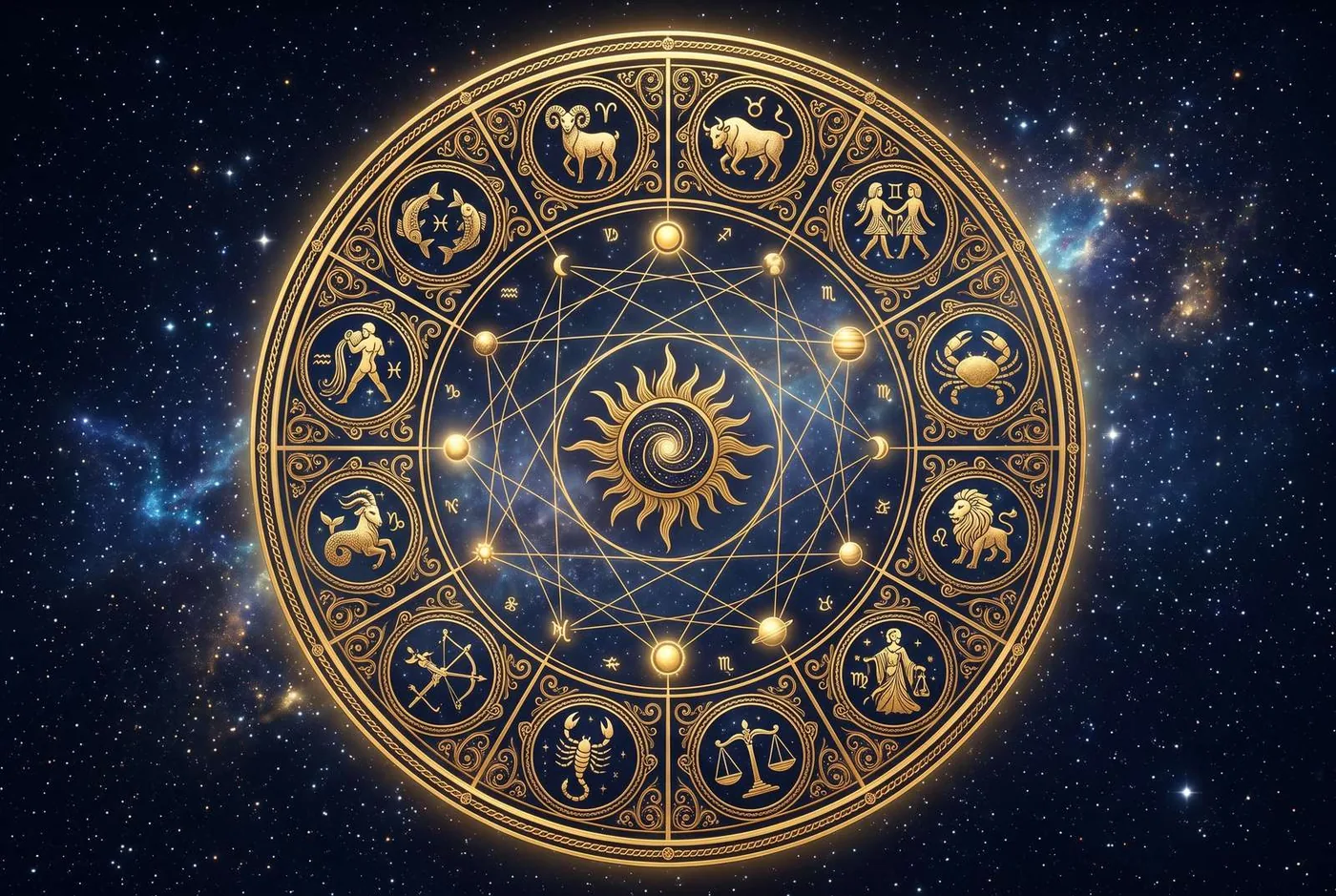
Cosmogram, birth chart and horoscope: the differences
These terms are often used interchangeably, but there are useful distinctions.
Cosmogramma can be created from a birth date to show approximate planetary positions and aspects, the angles between planets. The Moon moves fastest, and positions near a sign boundary may need a birth time to resolve.
Birth chart adds an exact birth time and place. These allow the calculation of the Ascendant and twelve houses, which astrology associates with different areas of life. When the time is unknown, a date-based cosmogram can still provide material for a symbolic reading.
A horoscope in everyday use often means a general reading for a zodiac sign, shared by everyone with that Sun sign. A cosmogram includes more planetary detail, although people born at similar times can have very similar charts.
| Feature | A horoscope | Cosmogramma | Birth chart |
|---|---|---|---|
| Information needed | Zodiac sign only | Date of birth | Date, time and place |
| Level of personalisation | The same text for everyone with Sun in Taurus | Similar for people born on the same day | Specific to a birth time and place |
| What it includes | A general interpretation | Planets in signs and aspects | The same, plus houses and the Ascendant |
| When it is useful | For entertainment | When the birth time is unknown | For a more detailed astrological reading |
How to create a cosmogram
Start with your date of birth. You can look up positions in astronomical ephemerides, as people did before online calculators, or use a calculator to build the chart and explore its interpretation. Cosmogramma's calculator provides a free calculation without registration. Choose the UTC offset at birth and add a time if known. This calculator shows planets and aspects, without houses or the Ascendant.
Reading a cosmogram in five steps
Planets in a cosmogram: a quick reference
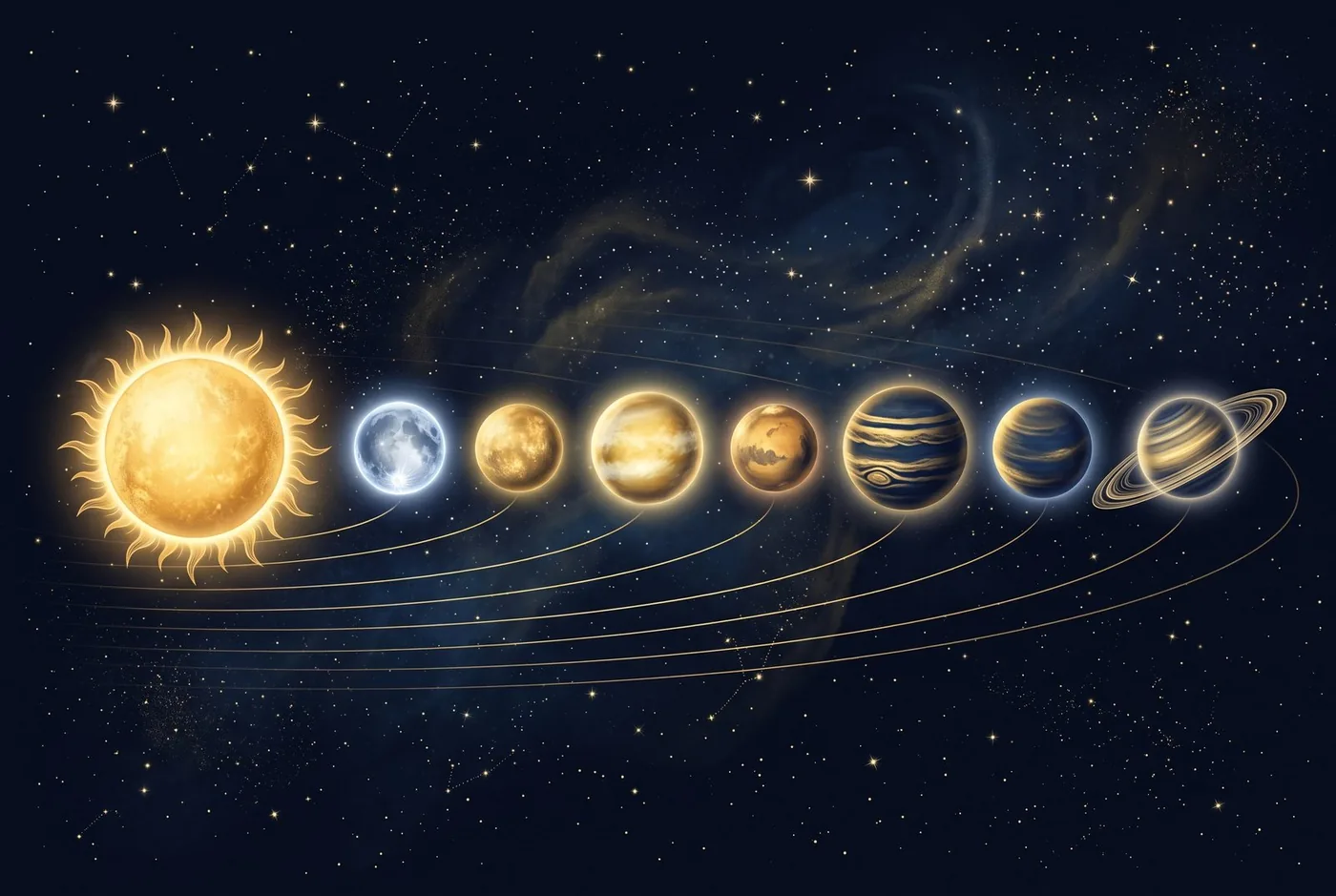
| Planet | Traditional themes | A question for reflection |
|---|---|---|
| ☉ Sun | Identity, willpower and self-expression | Who am I when I have nothing to prove? |
| ☽ Moon | Emotions, habits and a sense of safety | What helps me relax and breathe more freely? |
| ☿ Mercury | Thinking, communication and learning | How do I explain things and make sense of them? |
| ♀ Venus | Love, taste, values and enjoyment | What do I truly value? |
| ♂ Mars | Energy, action, anger and desire | How do I pursue a goal and handle conflict? |
| ♃ Jupiter | Growth, opportunity, faith and expansion | Where could thinking more broadly open possibilities? |
| ♄ Saturn | Discipline, boundaries, lessons and time | Which lesson has taken me the longest to learn? |
A short reading example
Imagine a chart with Sun in Virgo, Moon in Sagittarius and a challenging aspect between Mars and Saturn. An astrologer might connect Virgo with practicality and high standards, while the Sagittarius Moon suggests an emotional need for freedom: a desire to put things in order and then explore. Mars square Saturn could add a theme of energy meeting limits, inviting discipline without relentless self-criticism. These are interpretive prompts; a full chart adds further context.

Cosmogram and Destiny Matrix: two symbolic approaches to a birth date
A birth date can be explored through different traditions. A cosmogram starts from calculated planetary positions and their astrological meanings. Destiny matrix uses numerology to connect the same date with 22 Arcana, exploring themes from purpose to attitudes towards money. Some people compare the two as different prompts for self-reflection, without treating apparent similarities as proof.
Five common misconceptions about cosmograms
Create your cosmogram
Enter your date of birth to explore a sky chart and its interpretation. Our sky calculator shows planetary positions and aspects. It does not calculate houses or the Ascendant.
Create my chart Calculate my Destiny Matrix